
Softner Plant
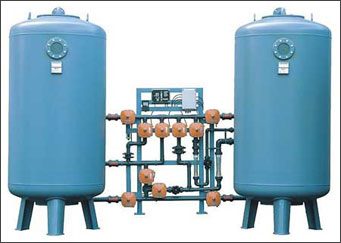

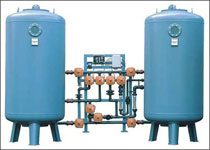
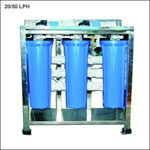
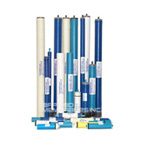
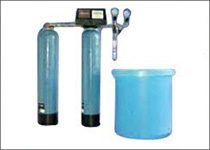
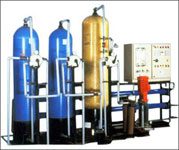
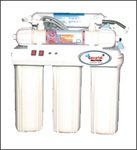
Large & Medium Capacity Water Softner Plant
Hardness is a chemical parameter of water that represents the total concentration of calcium and magnesium ions. It is called hardness because if calcium and magnesium are present in your water, making a lather or suds for washing is "hard" to do.
Another negative aspect of hard water is the capacity to produce scale, primarily caused by calcium and magnesium salts. Hardness is usually expressed in grains per gallon or parts per million (ppm) as calcium carbonate equivalent. The degree of hardness standard as developed by the Water Quality Association (WQA) is:
The softener plant degining capacity 100 to 2,00,000 Ltr. Per Day depend on water property with water your requirement.
Water Hardness exist in significant areas of the country that result in disappointing white scales on fixtures, appliances and piping. Softening of water produces immediate benefits such as reduced usage of soap and detergent, cleaner clothes and better taste of food and beverages.
1. Prevent Scaling in boilers, geysers, heat exchangers, press, etc.
2. Prevent Scaling & corrosion in pipelines and bathroom fittings.
3. Save up to 70% of detergent & soap in washing process.
4. Prevent scaling on human skin & stop hair loss.
5. Reduces cooking time and consumption of gas.
6. Reduces electricity bill.
7. Low maintenance cost.
Hardness is a chemical parameter of water that represents the total concentration of calcium and magnesium ions. It is called hardness because if calcium and magnesium are present in your water, making a lather or suds for washing is "hard" to do.
Another negative aspect of hard water is the capacity to produce scale, primarily caused by calcium and magnesium salts. Hardness is usually expressed in grains per gallon or parts per million (ppm) as calcium carbonate equivalent. The degree of hardness standard as developed by the Water Quality Association (WQA) is:
| Term | Grains/Gallon | Mg/L or PPM |
| Soft | Less than 1.0 | less than 17.1 |
| Slightly Hard | 1.0 to 3.5 | 17.1 to 60 |
| Moderately Hard | 3.5 to 7.0 | 60 to 120 |
| Hard | 7.0 to 10.5 | 120 to 180 |
| Very Hard | 10.5 and above | 180 and above |
The softener plant degining capacity 100 to 2,00,000 Ltr. Per Day depend on water property with water your requirement.
Water Hardness exist in significant areas of the country that result in disappointing white scales on fixtures, appliances and piping. Softening of water produces immediate benefits such as reduced usage of soap and detergent, cleaner clothes and better taste of food and beverages.
1. Prevent Scaling in boilers, geysers, heat exchangers, press, etc.
2. Prevent Scaling & corrosion in pipelines and bathroom fittings.
3. Save up to 70% of detergent & soap in washing process.
4. Prevent scaling on human skin & stop hair loss.
5. Reduces cooking time and consumption of gas.
6. Reduces electricity bill.
7. Low maintenance cost.